Porsche 718 Spyder RS: The Engine Behind Your Shoulder
STUTTGART / OPEN AIR / 1:18
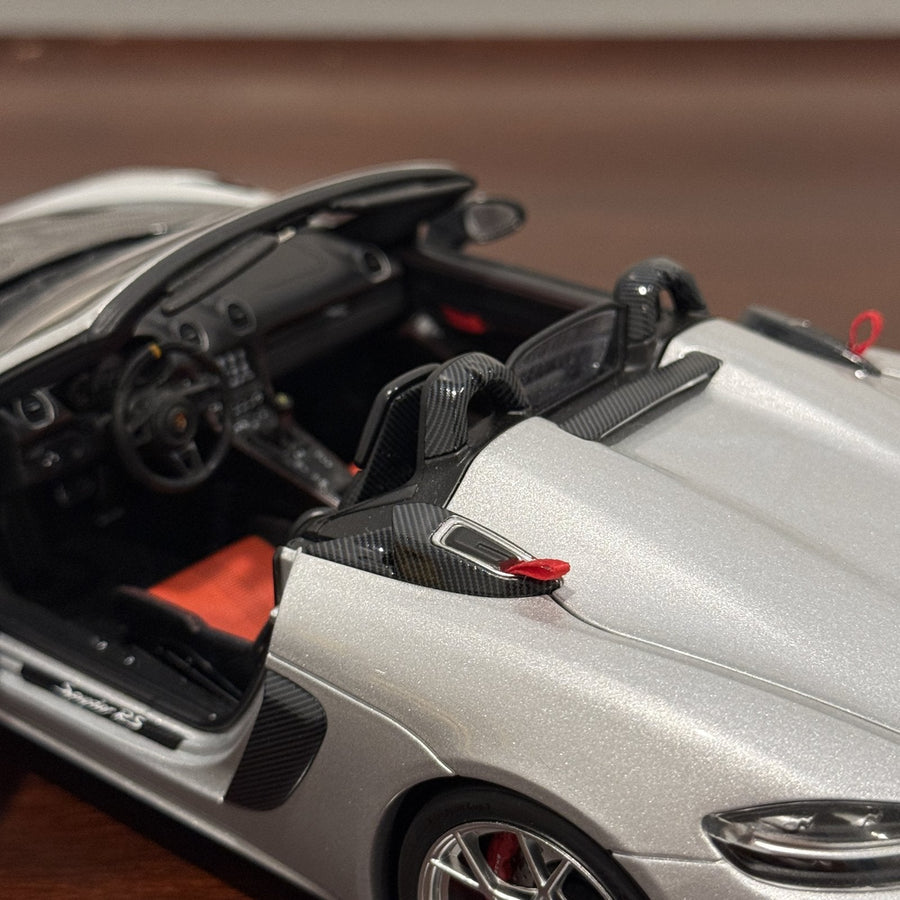
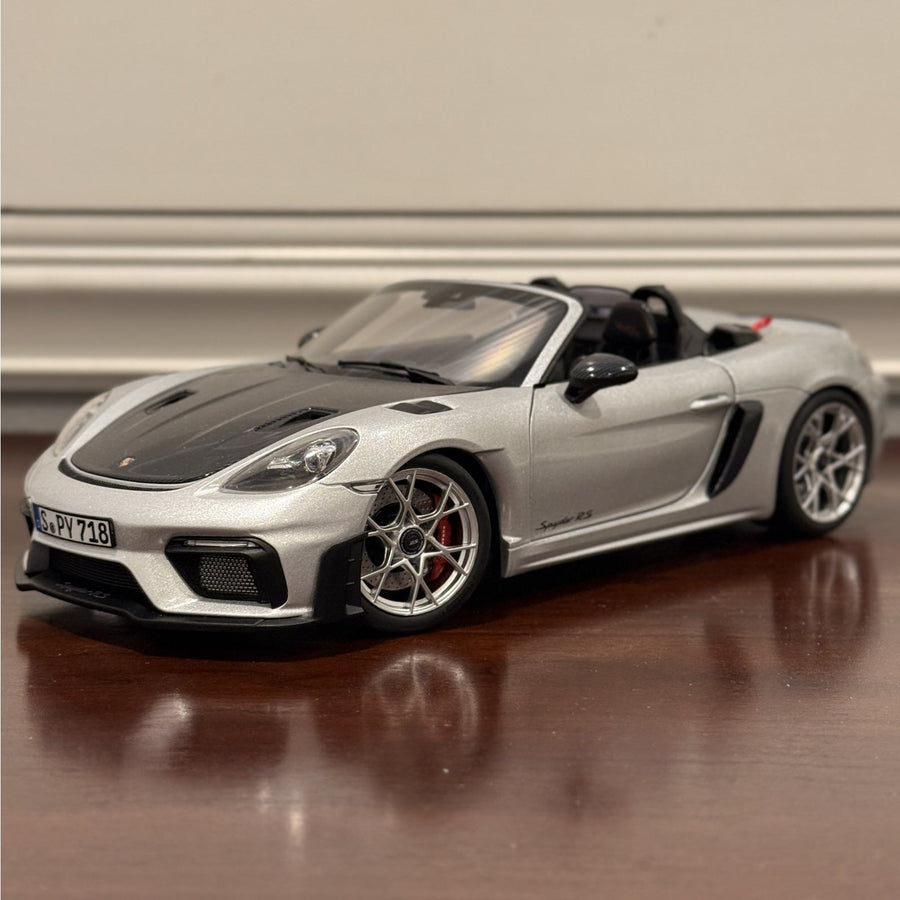
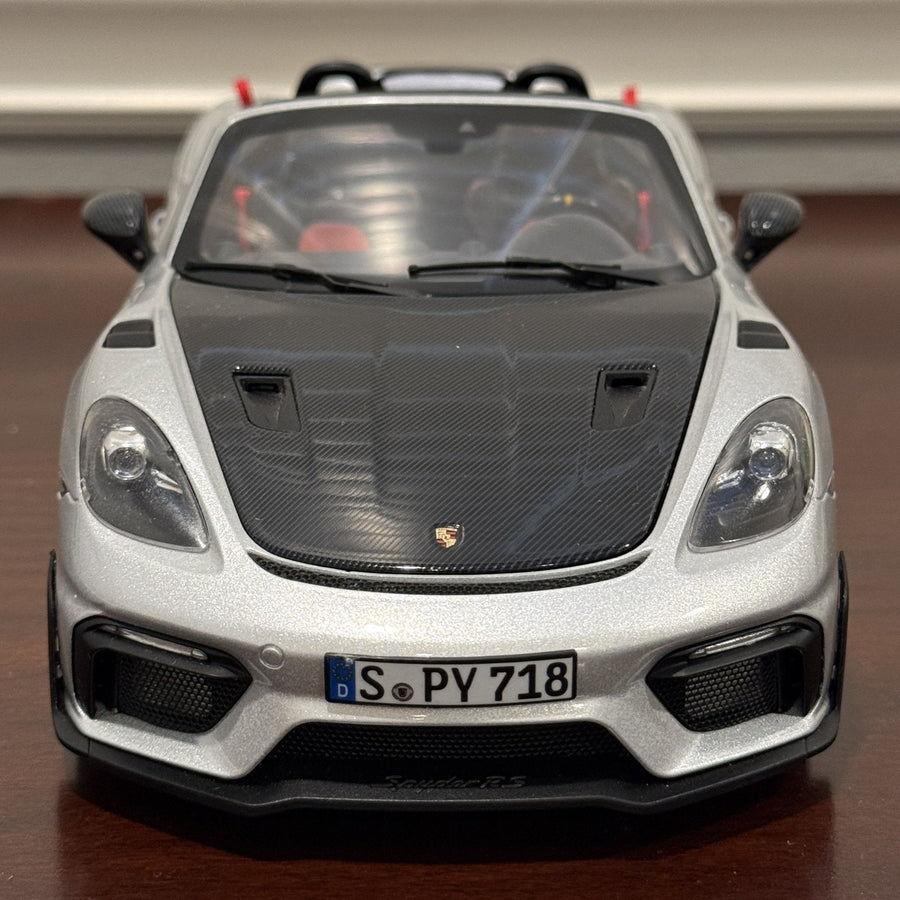
GT Silver, a dark hood and a pair of red seats. Norev’s 718 Spyder RS gives us a close look at a roadster built around a remarkable engine.
A familiar shape with a different voice
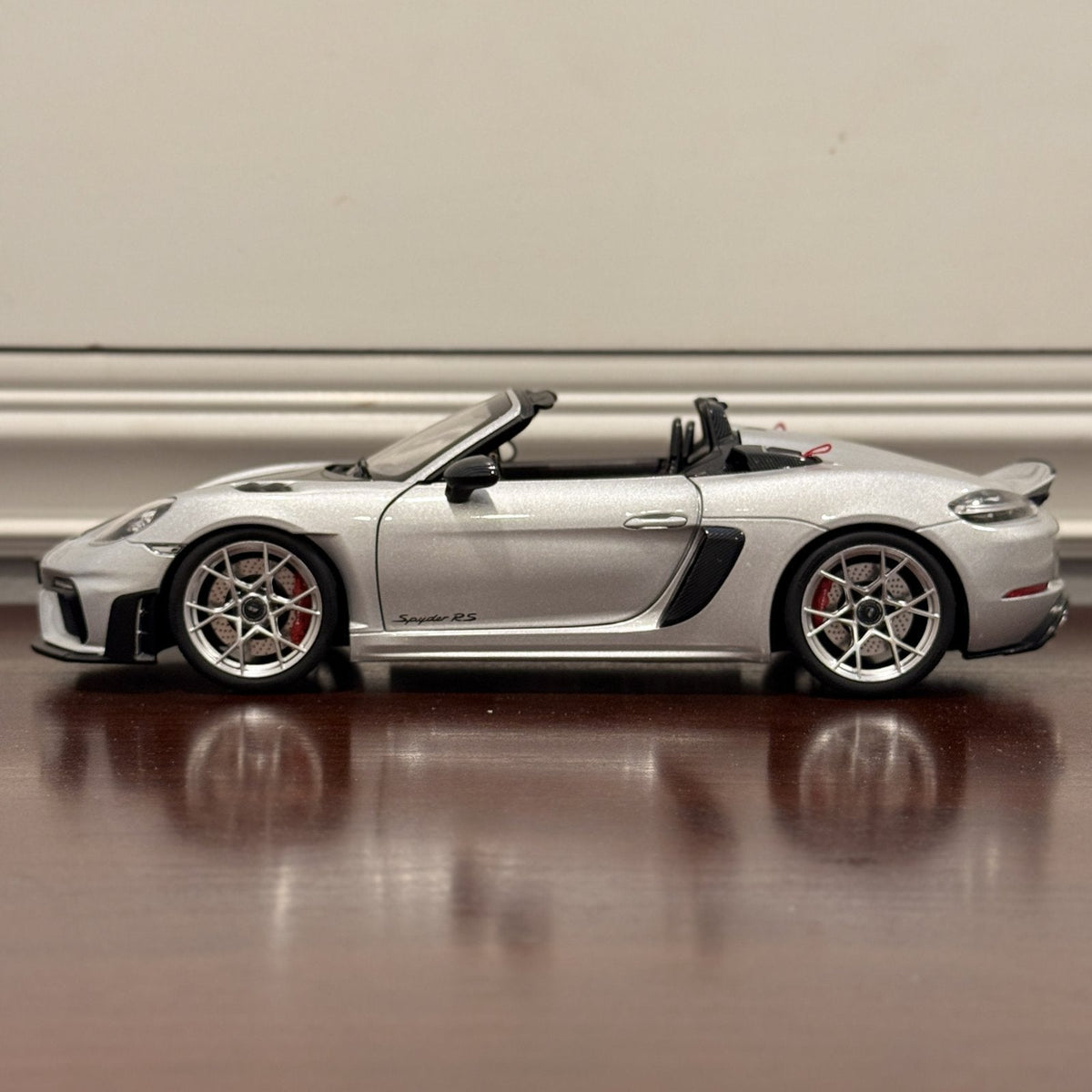
The first photograph to spend time with is the side view. There is no large fixed wing, and the roof is absent. The body falls away behind the two seats. On this GT Silver Norev, the black intake and red seat centers become the small details that hold your attention.
Porsche introduced the 718 Spyder RS in 2023. Its 4.0-liter naturally aspirated flat-six comes from the 911 GT3 family, produces 500 PS and reaches 9,000 rpm. A seven-speed PDK transmission completes the powertrain. The intake openings just behind the occupants make the location of that engine part of the experience. Porsche’s launch account
Why the 718 name matters
The number reaches back to the 718 RSK, introduced in 1957 as a development of the 550 A. Porsche explains the RS as Rennsport; the K referred to the arrangement of the front torsion rods. That original racing car and today’s roadster belong to different engineering eras. The name connects them through Porsche’s long interest in compact, mid-engined sports cars. Porsche’s 718 history
It is a useful connection for a model collection. A modern Spyder beside an early Porsche sports racer tells a story through proportions, cockpit position and the space occupied by the engine. The shared badge is only the beginning.
The Weissach details, close up
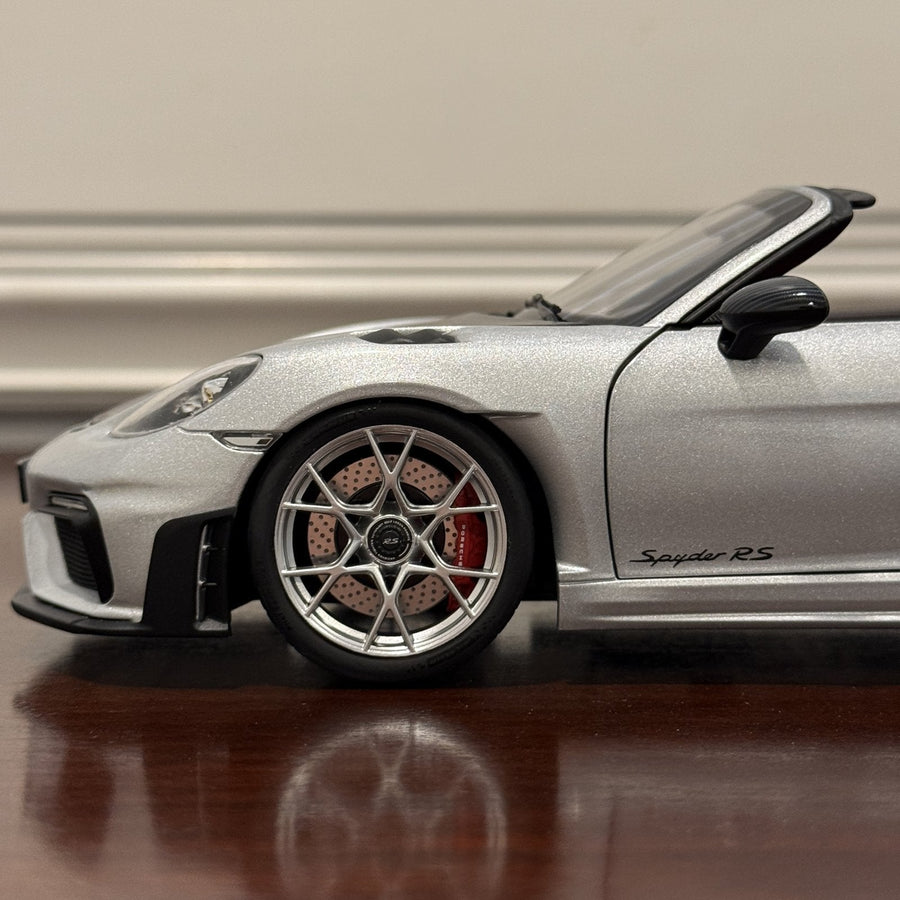
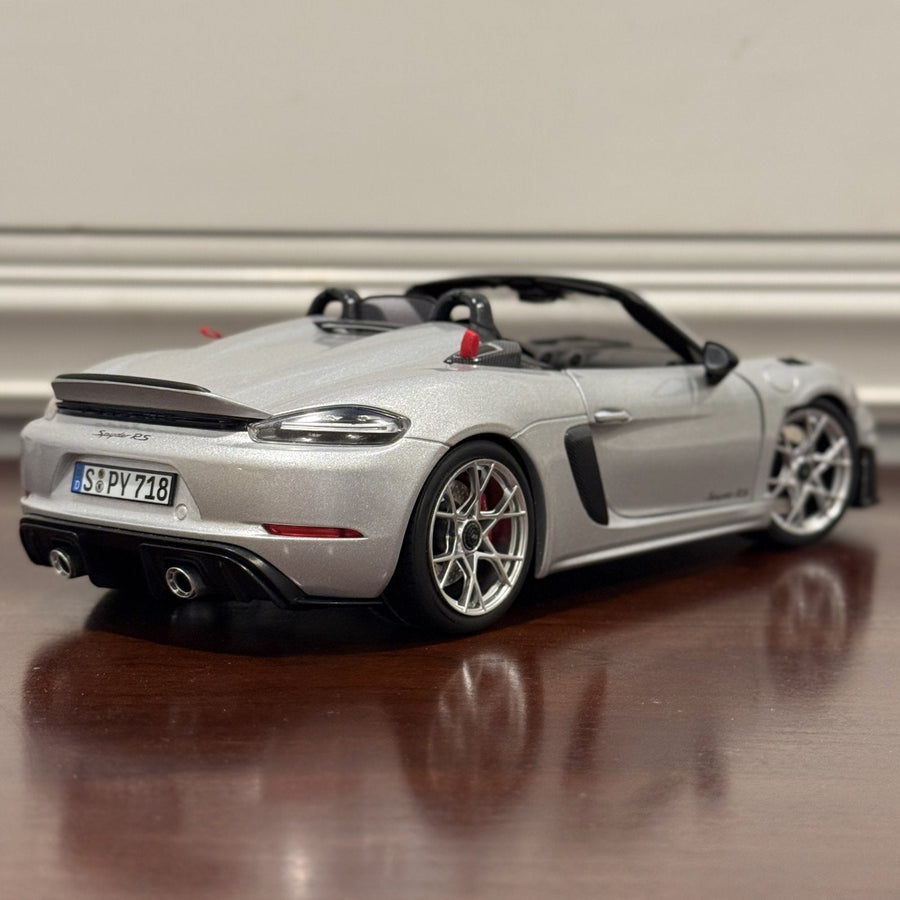
On the real Spyder RS, the optional Weissach package brings additional carbon-weave details and titanium exhaust tips. The car uses a rear ducktail rather than the Cayman GT4 RS’s large fixed wing. Porsche also gave the Spyder softer spring and damper settings than its closed-roof counterpart. Porsche’s specification
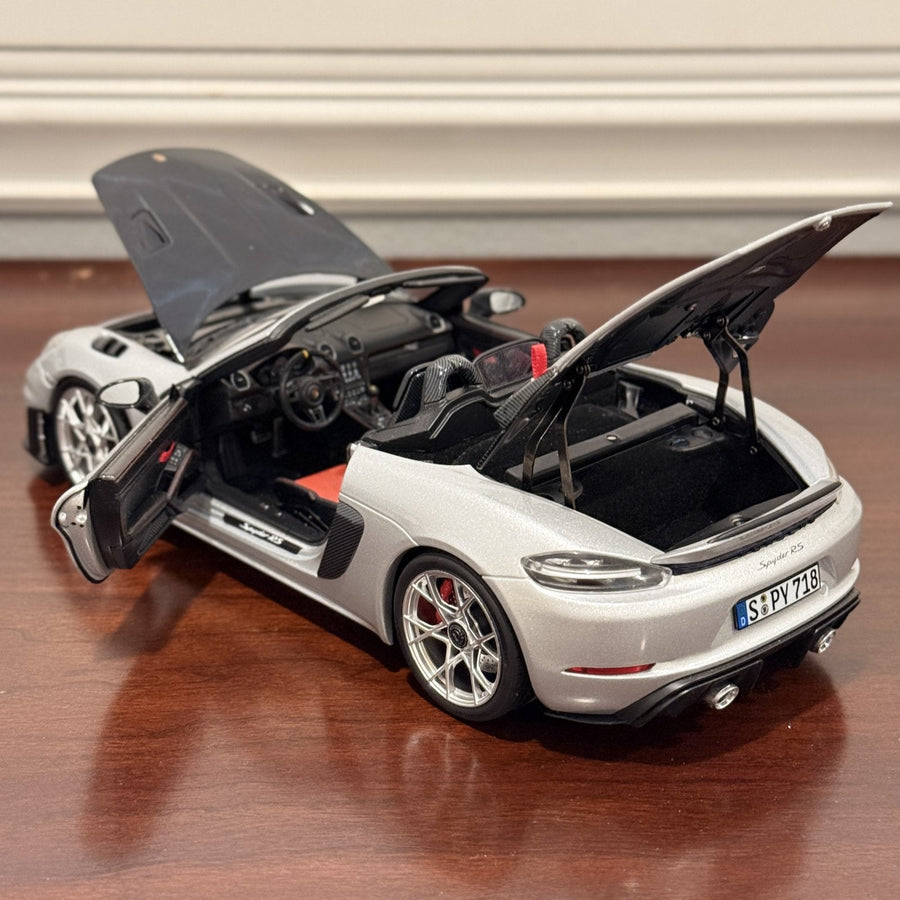
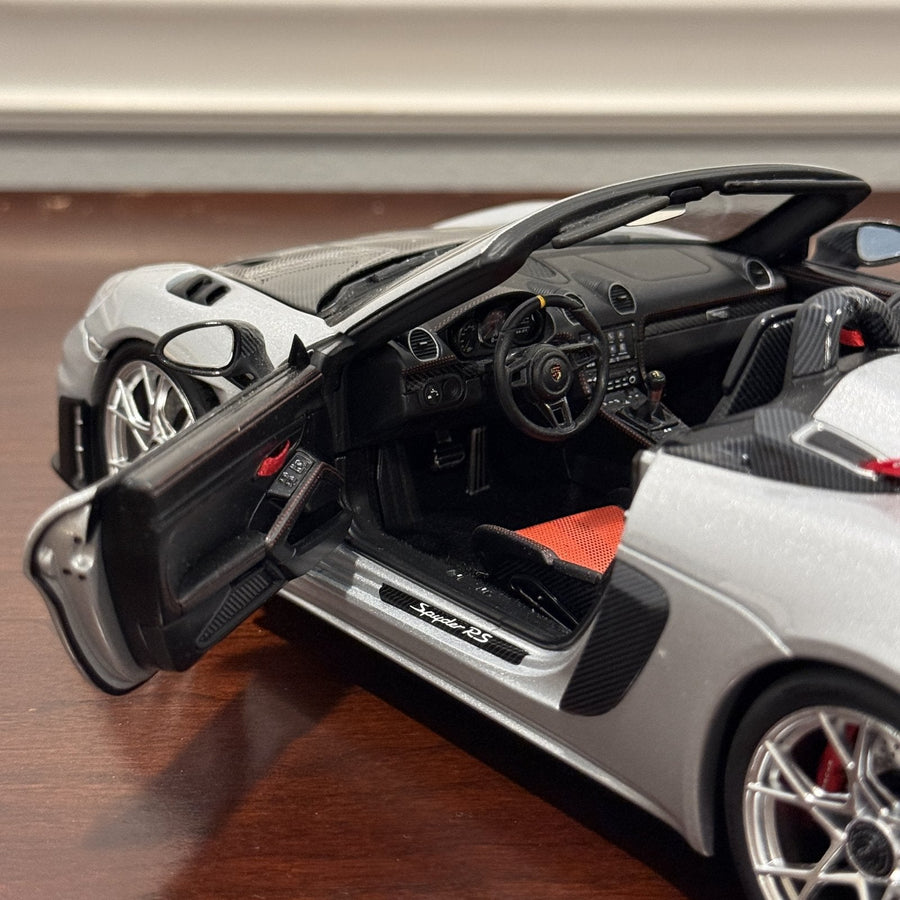
Here, the miniature’s dark hood draws the eye toward the two ducts. Follow the silver wheel spokes inward to the red calipers, then look across the cabin at the seat inserts. The palette is restrained enough that each red detail is easy to pick out.
The opening photographs show the particular Norev example in the JPC archive. They are especially useful around the door sills and luggage compartments, where a closed-car portrait can conceal much of the model’s construction. For another take on a discreet modern Porsche, continue to our 992 GT3 Touring gallery.