Pagani Huayra BC: The Name Behind the Wing
SAN CESARIO / ROSSO DUBAI / 1:18
The wing catches your eye first. The initials take you further back: to Benny Caiola, Horacio Pagani and the first person to buy one of his cars.

Two initials, one friendship
Car names often ask us to remember a place, an engine size or a racing result. BC asks us to remember a person. Pagani dedicated the Huayra BC to Benny Caiola, the enthusiast who became the company’s first customer and an important source of encouragement for Horacio Pagani. Pagani’s dedication
The BC arrived in 2016. Pagani conceived it as a road car with greater emphasis on track use, drawing inspiration from the Zonda R and Zonda Cinque. The company’s history places it within a continuing program of lighter construction and revised aerodynamics. Pagani’s history
Knowing that background changes a walk around this AUTOart. The rear wing has an engineering purpose, but the badge carries a personal history. Both belong in the story of the car.
Rosso Dubai and the dark weave
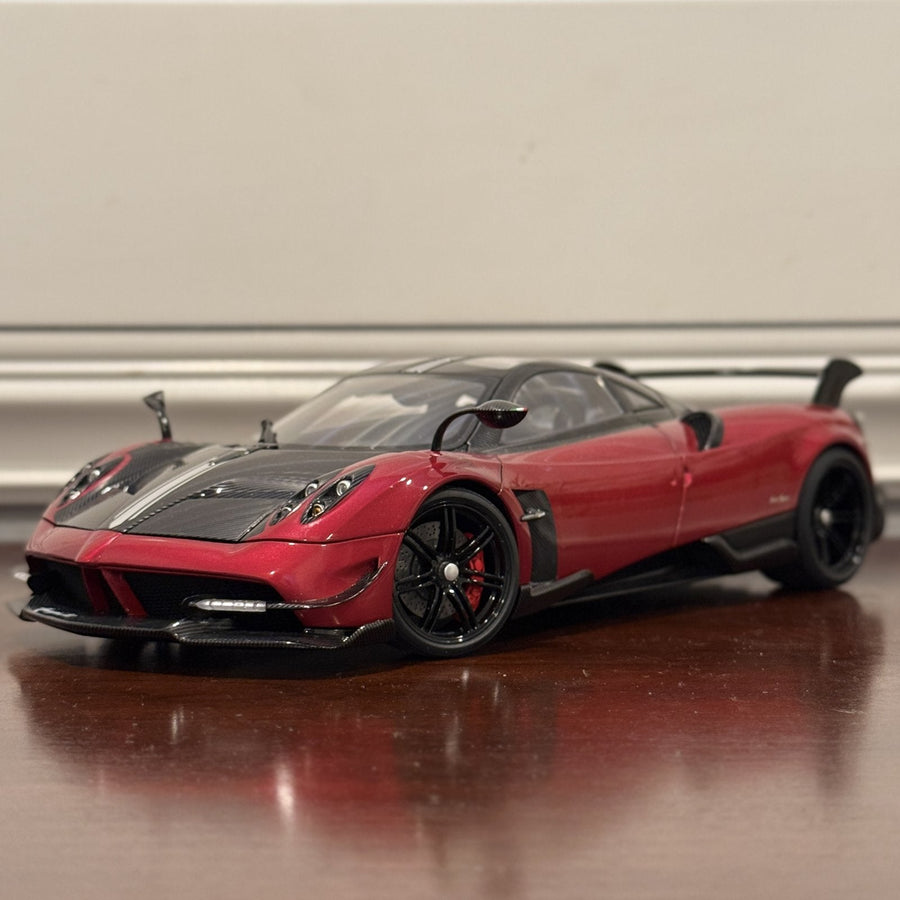
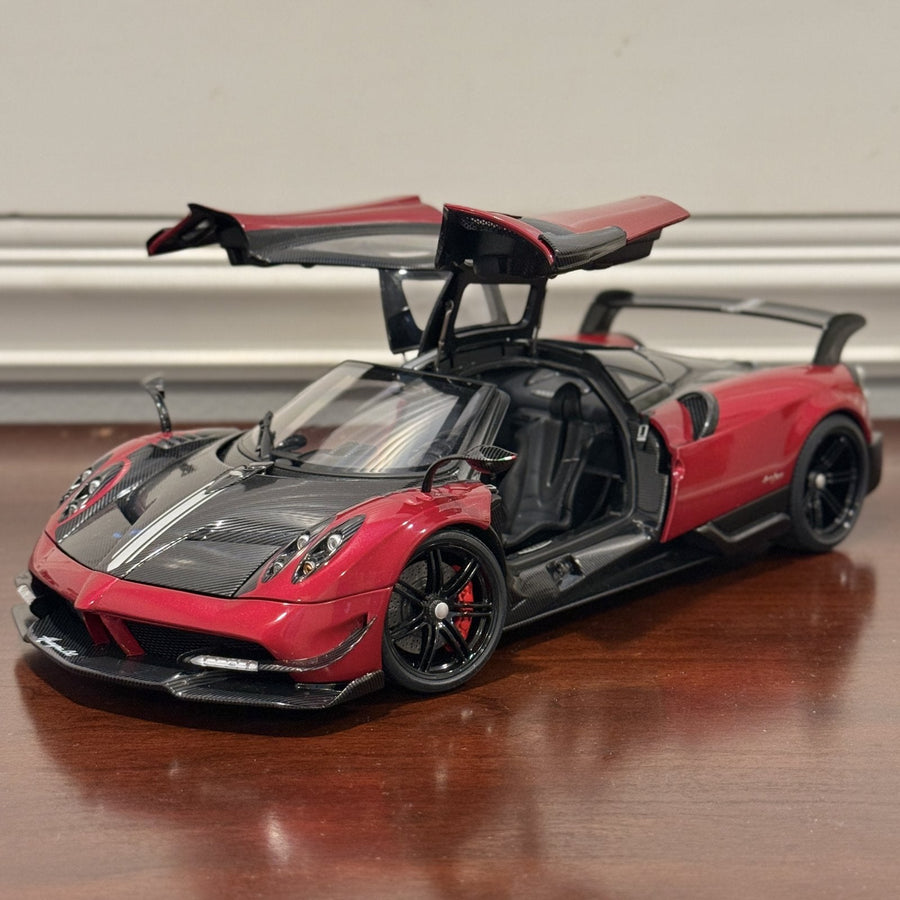
The JPC example wears Rosso Dubai red with a carbon-pattern finish across the hood and other surfaces. In the front-quarter photograph, silver stripes run toward the windshield while red follows the outer fenders. Black wheels keep the lower half visually quiet.
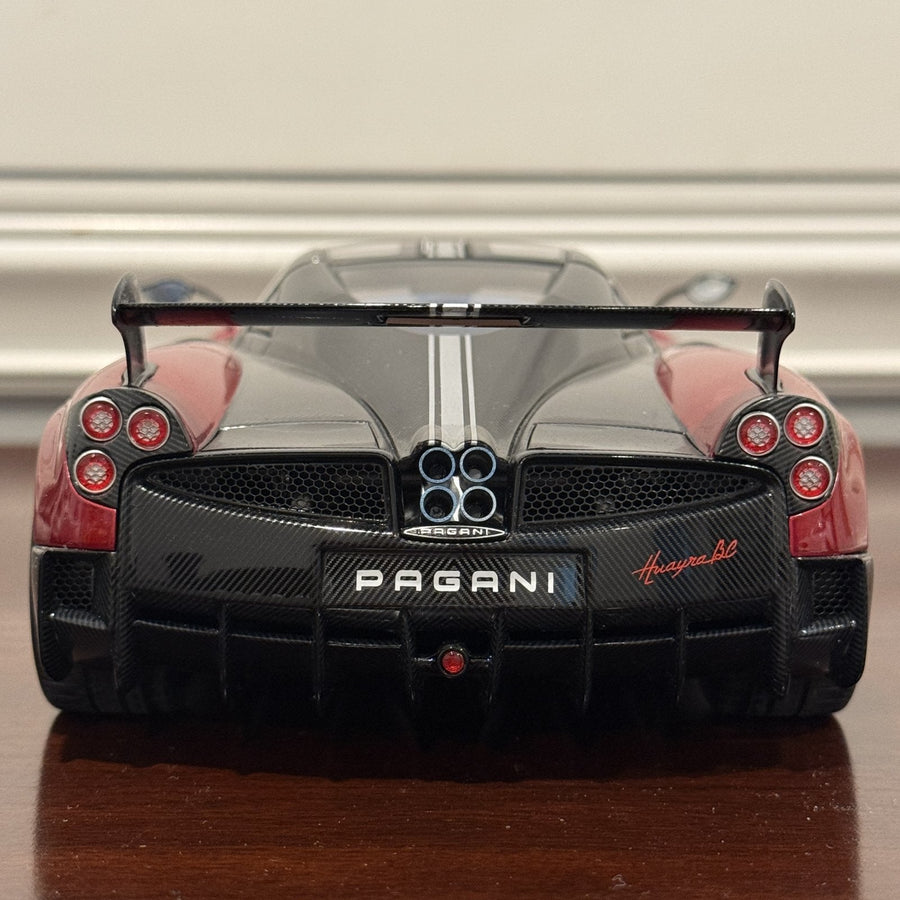
Move to the rear and the arrangement becomes busier: a high wing, small circular lights, four central exhaust outlets and deep openings below. The straight rear view is useful here. It lets you compare the symmetry of the lamps and exhausts without the perspective of a three-quarter photograph.
For collectors, these are reasons to keep the exact specification attached to a model. A red BC has a different visual character from the green Huayra Roadster elsewhere in the archive, even before you account for the roof and aerodynamic changes.
Under the clamshells
The full-size BC uses a Mercedes-AMG twin-turbo V12 and a seven-speed automated manual transmission developed with Xtrac. Pagani’s published specification also identifies its carbo-titanium monocoque. These details describe the real car; the gallery shows how AUTOart represents that architecture at 1:18. Pagani’s technical record
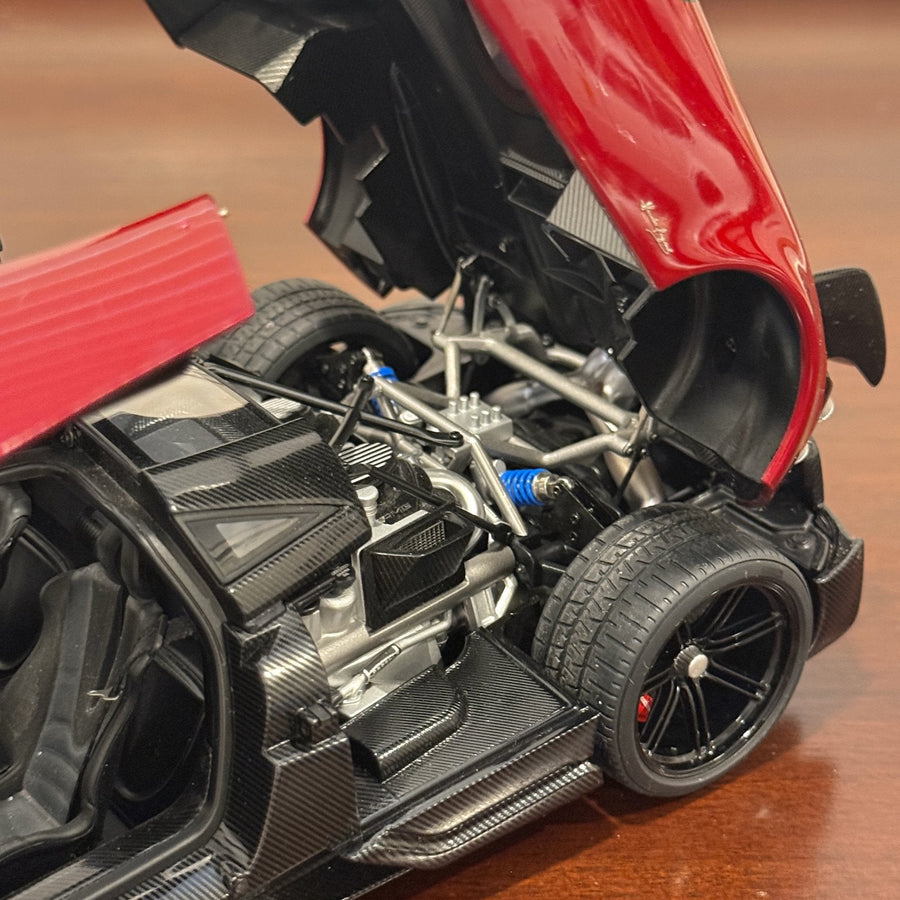
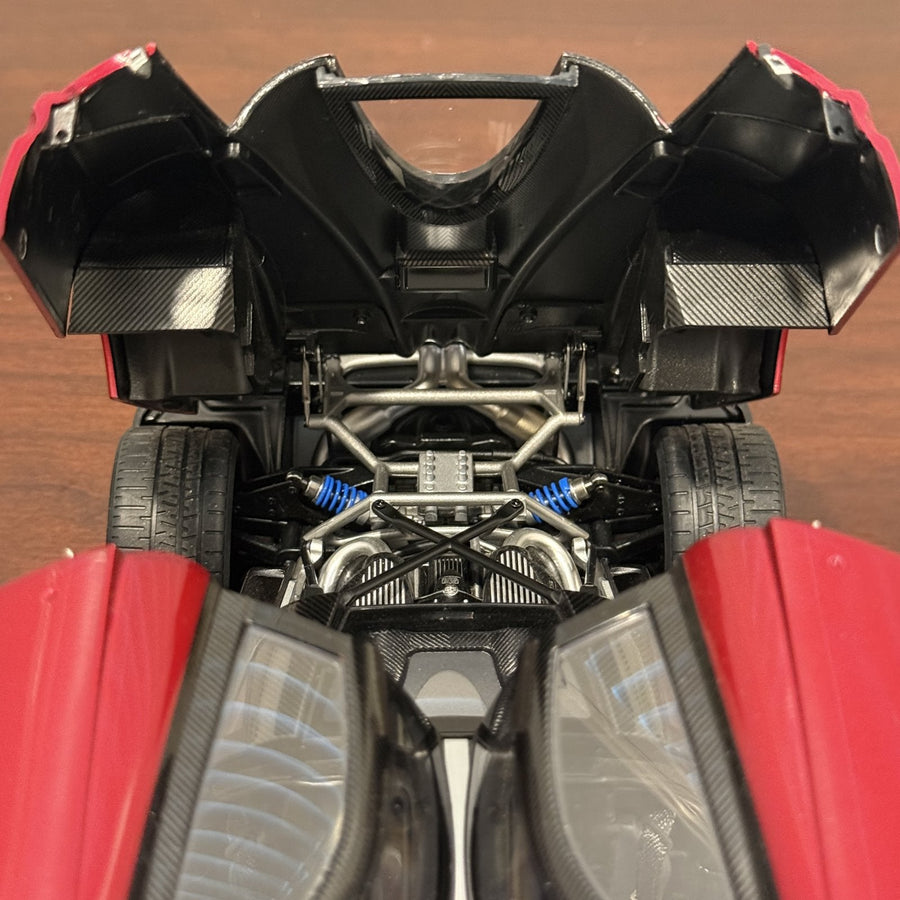
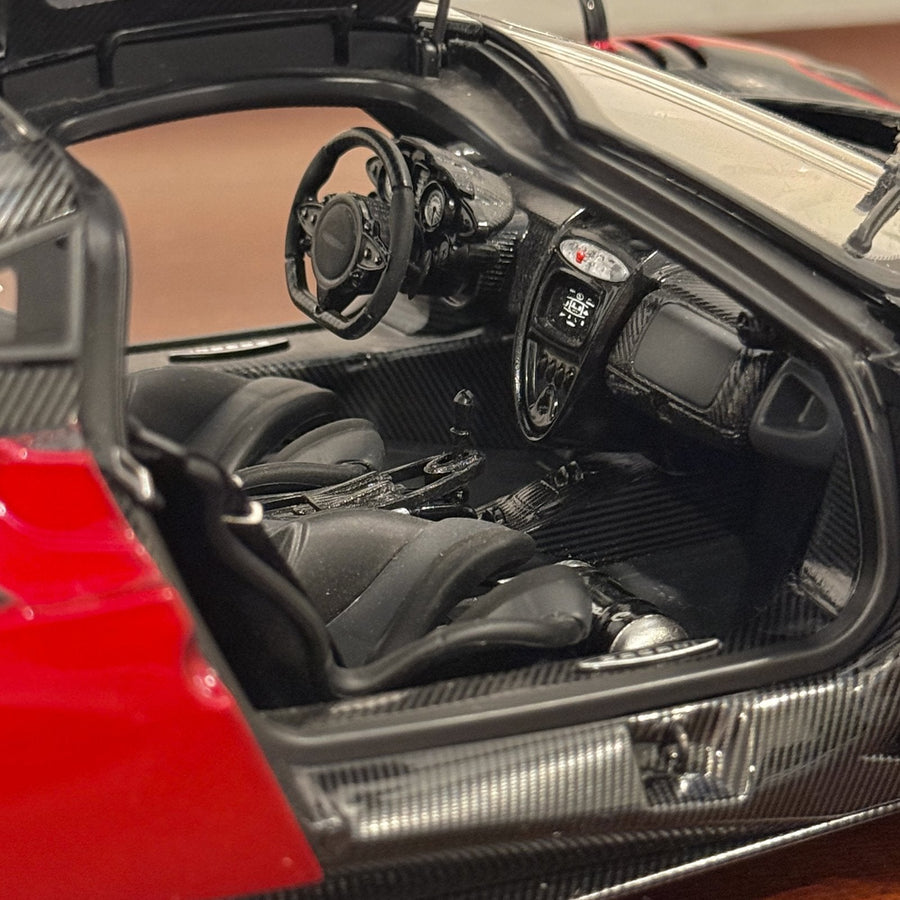
With the rear clamshell raised, the model exposes bright bracing, the engine and suspension components. The overhead photograph rewards a slower look than the exterior portrait. In the cabin, the bright instrument surrounds and gear selector give your eye a route through the otherwise dark interior.
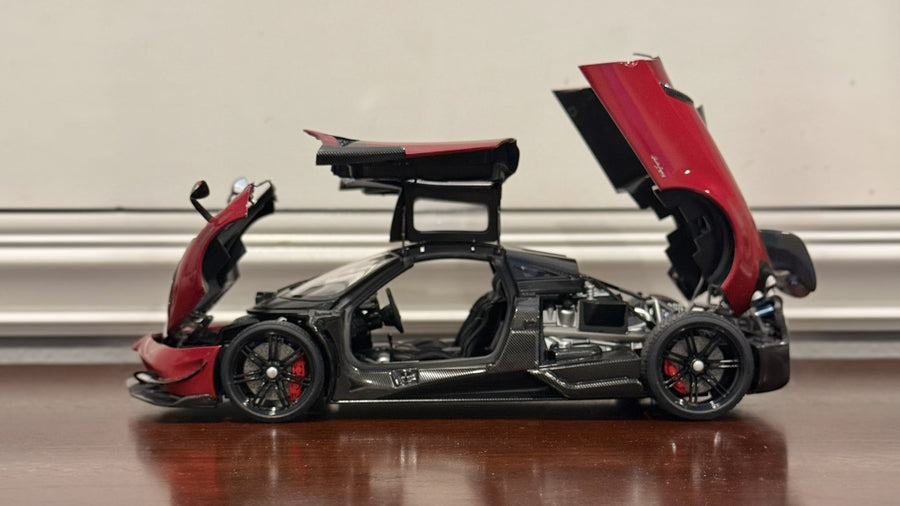
Finally, compare the closed side view with the photograph of all the panels raised. The basic wheelbase and cabin position remain clear while the bodywork opens around them. That transformation is a large part of the appeal of this particular AUTOart.