Ferrari F80 in Yellow: A New Shape in the Lineage
MARANELLO / YELLOW AND BLACK / 1:18
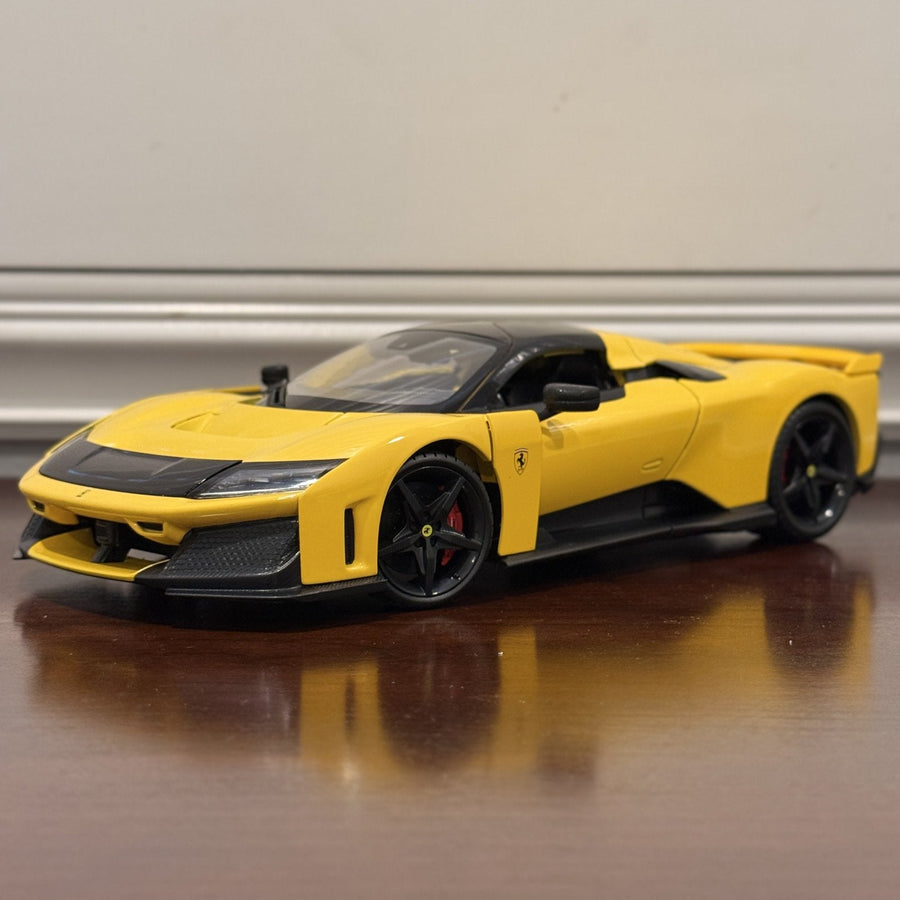
A black band across the nose, deep side openings and a wing above the tail. In yellow, Maisto’s F80 makes its most distinctive lines easy to follow.
The next car on the shelf
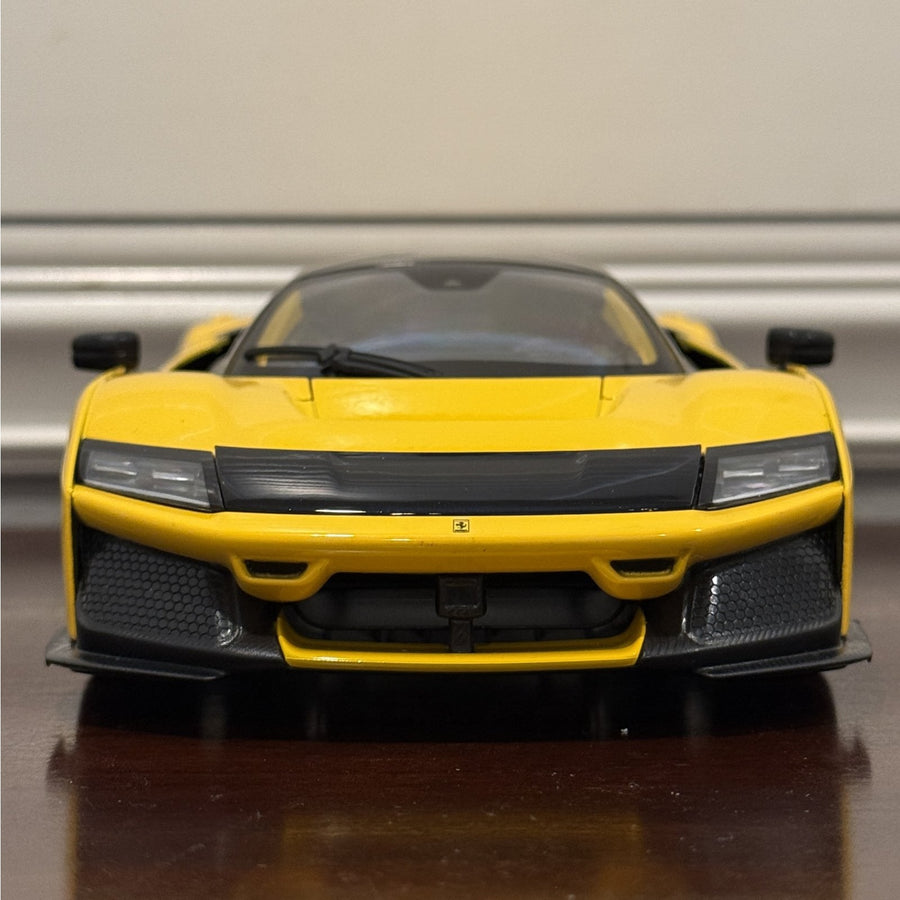
Place the F80 beside an F40 or Enzo and the differences are immediately visible. Each has a low cabin, a wide stance and bodywork organized around its mechanical needs. The F80 adds a particularly graphic face: a dark horizontal band above an intricate lower nose.
Ferrari unveiled the F80 on October 17, 2024, announcing a production run of 799 cars. The company placed it in the lineage that began with the 1984 GTO and continued through the F40, F50, Enzo and LaFerrari. Those names make an appealing subject for a model shelf: several generations of Ferrari’s ideas about its most ambitious road cars. Ferrari’s launch record
Six cylinders, with electrical assistance
The F80’s 3.0-liter, 120-degree V6 produces 900 cv. Its hybrid system adds electrical assistance for a combined 1,200 cv, with motors at the front axle as well as an MGU-K at the rear. Ferrari’s technical data describes a substantially different powertrain from the large naturally aspirated V12s associated with the F50 and Enzo. Ferrari’s F80 technical data
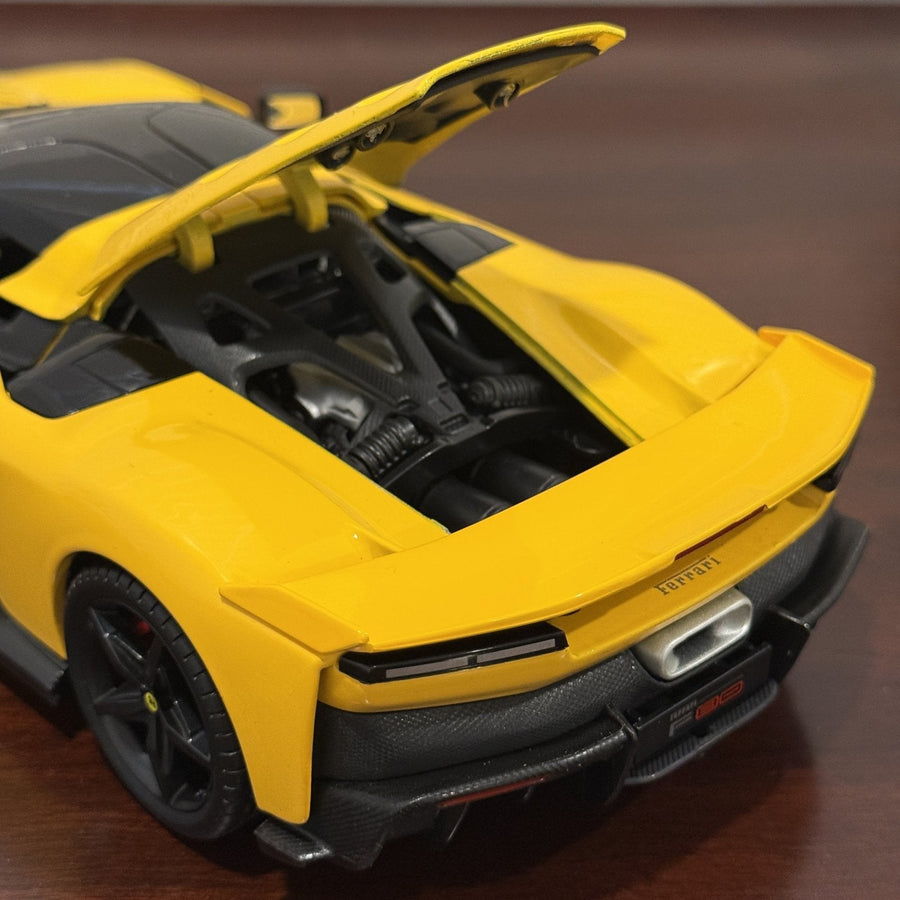
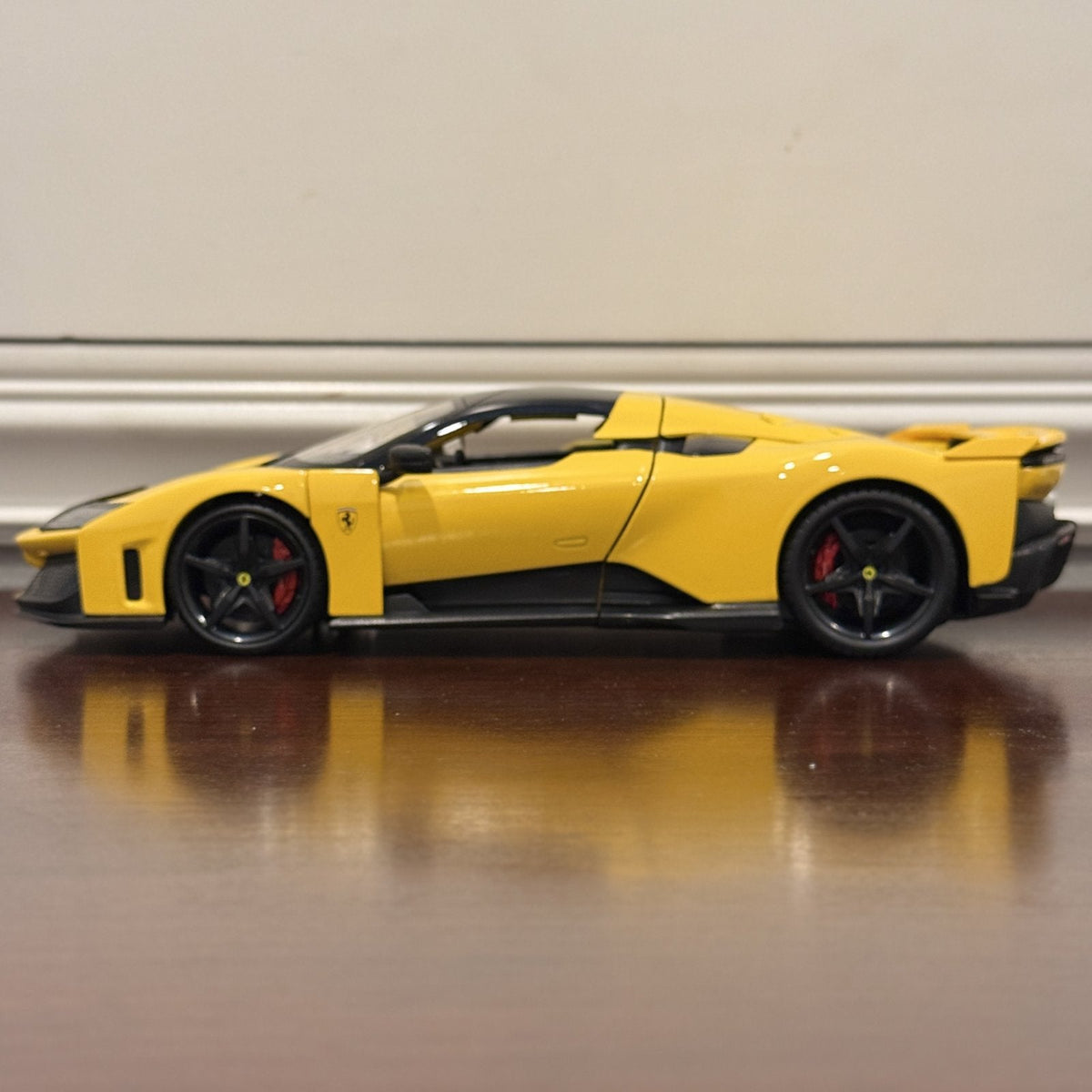
These are specifications of the full-size car. On the Maisto model, the interest is visual: how the cabin, large side opening and rear cover divide up the body. The open engine-cover photograph gives that layout more context than the closed side portrait alone.
What yellow reveals
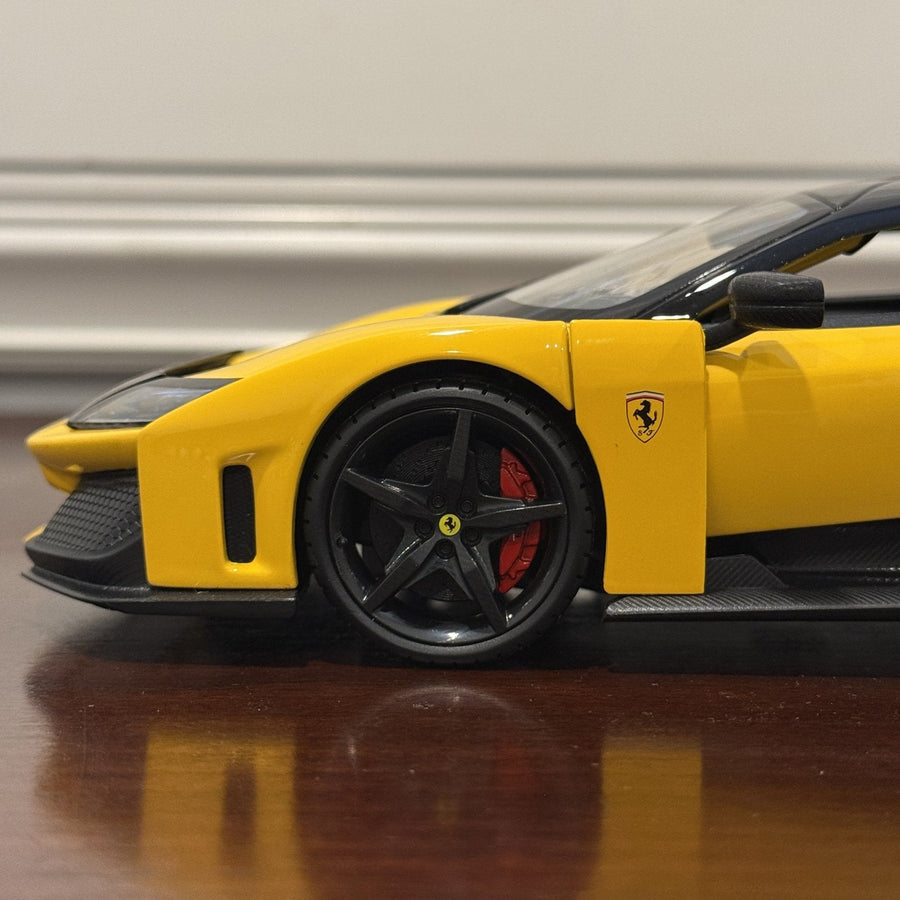
The color is doing useful work here. Yellow separates the upper body from the black lower surfaces and emphasizes the vertical opening behind the front wheel. The red brake calipers are small accents rather than the dominant color in the photograph.
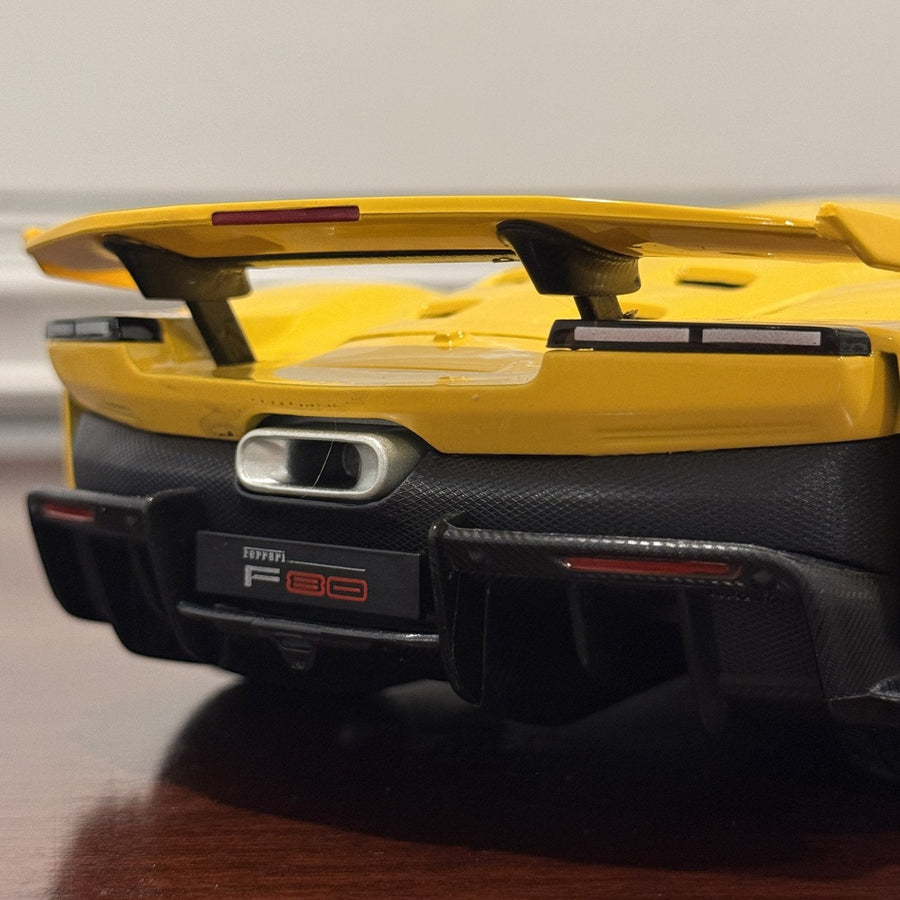
Look at the nose straight on, then return to the side. The first view makes the width obvious; the second shows how low the roof sits relative to the rear wing. At the back, the exhaust opening and the dark diffuser give the tail a different texture from the broad yellow panels above.
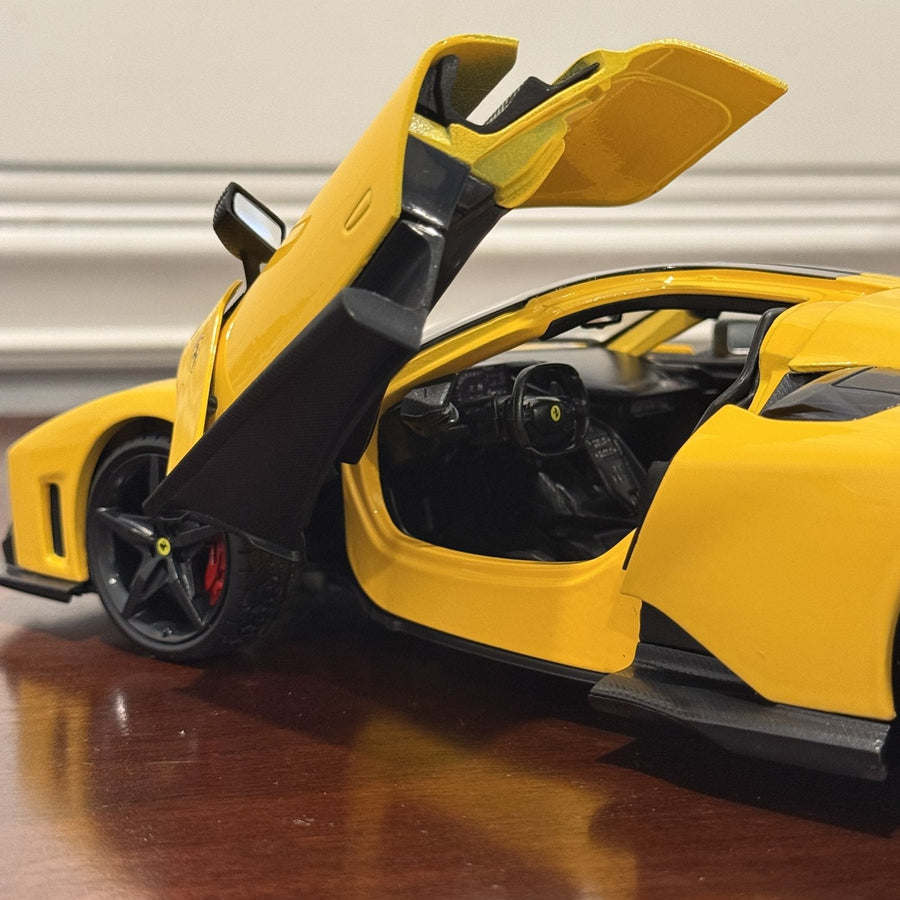
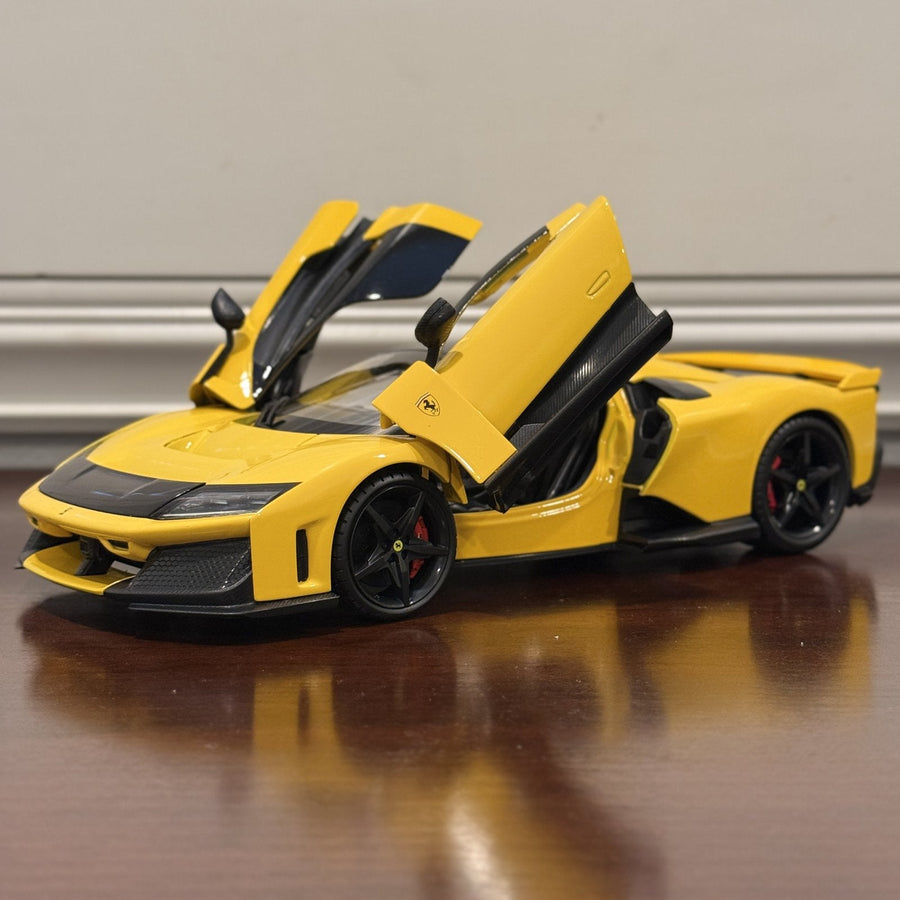
Opening the butterfly doors changes the outline again. The raised yellow panels frame the dark cabin, and the close-up lets you inspect the steering wheel without losing the surrounding door structure. These photographs show the individual Maisto in the JPC library, including its visible finish and details.
To follow the family further back, compare it with the yellow F40, the yellow 288 GTO and our silver Enzo. Keeping the colors in view makes the changes in body design especially easy to see.